Airwaves
I worked on Airwaves at Babcock: a fully bespoke, 20-player simulation used by the Royal Navy for war-gaming exercises at Royal Naval Air Station Yeovilton.
- Client
- Babcock · Royal Navy
- Location
- RNAS Yeovilton, Somerset
- Format
- 20-player multiplayer simulation
- My contribution
- Bespoke simulation software
The training environment
Airwaves worked like a multiplayer game built for training. Twenty participants could take part in a shared simulated environment, allowing the Royal Navy to run war-gaming exercises.
The application had different views for instructors, pilots, students and spectators.
The engineering
The software was fully bespoke, bringing together radar simulation, aircraft simulation and aircraft physics. Those systems were part of the same multiplayer training environment.
It was part of my work at Babcock developing software for the Royal Navy, where understanding the operational setting mattered alongside the engineering.
Designing a shared simulation
My surviving design notes explore which settings belonged to the shared simulation and which belonged to an individual view. They cover aircraft and radar configuration, per-player radio controls, and the relationship between shared objects and their local views.
The notes also work through the client/server lifecycle: connecting a player, creating an exercise, adding entities and starting the simulation. They consider running it for a fixed number of frames during testing, so behaviour could be examined in controlled steps.
Technology stack
- C# · .NET Framework
- The bespoke simulation, shared domain model and server.
- WPF
- The Windows training consoles and radar interface.
- Topshelf
- Hosting the simulation server as a Windows service.
Inside Airwaves

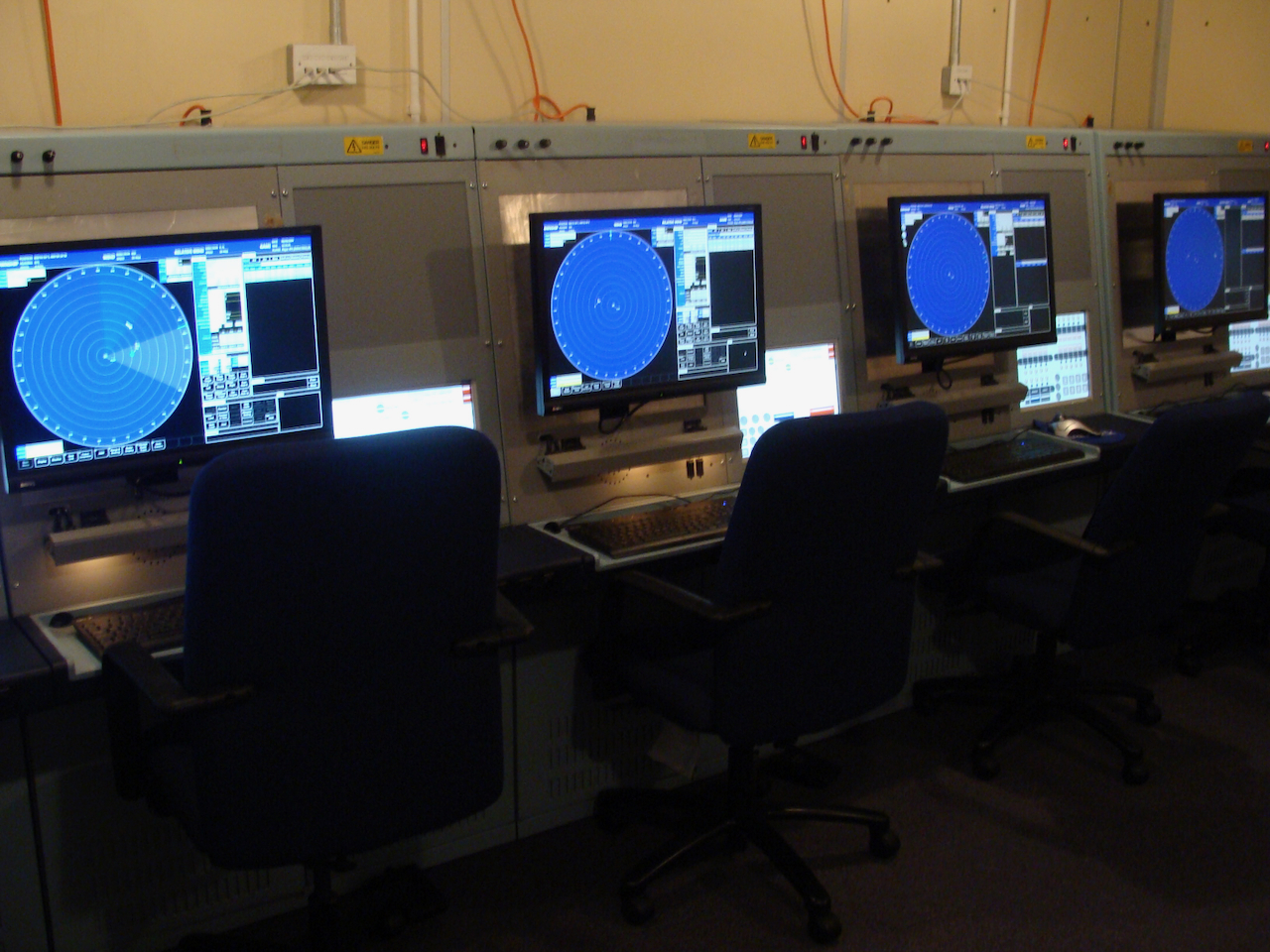
The Airwaves training room, with radar displays and supporting screens at each station. Photograph from my project archive.
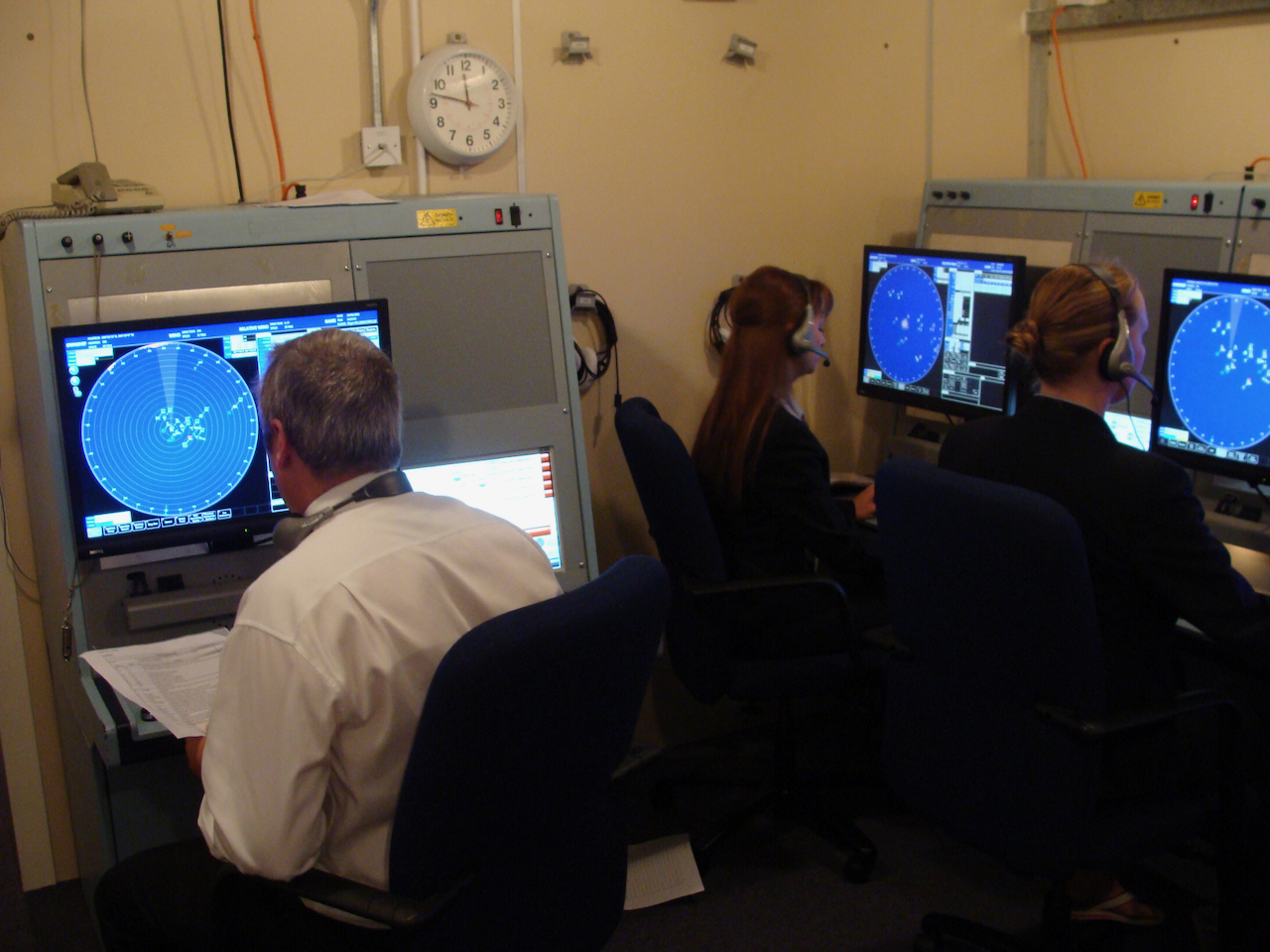
Airwaves in use: participants working at separate simulator stations with headsets and radar displays.
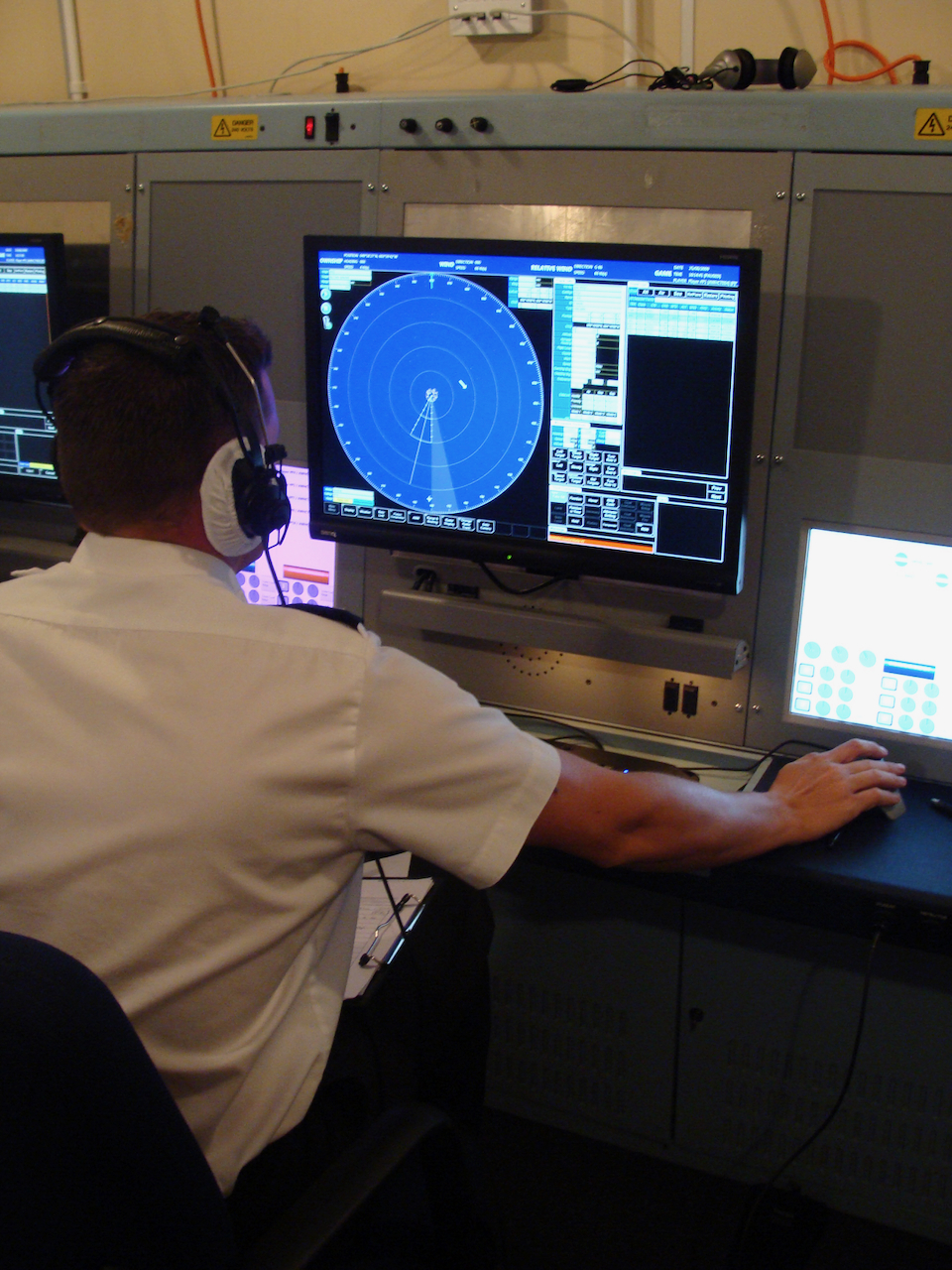
A closer view of the radar interface and the separate control screen at an Airwaves station.